
Emirati Hospitality: Roots of Bedouin Tradition and Culture | Craftihouse
Emirati Hospitality: Roots of Bedouin Tradition and Culture
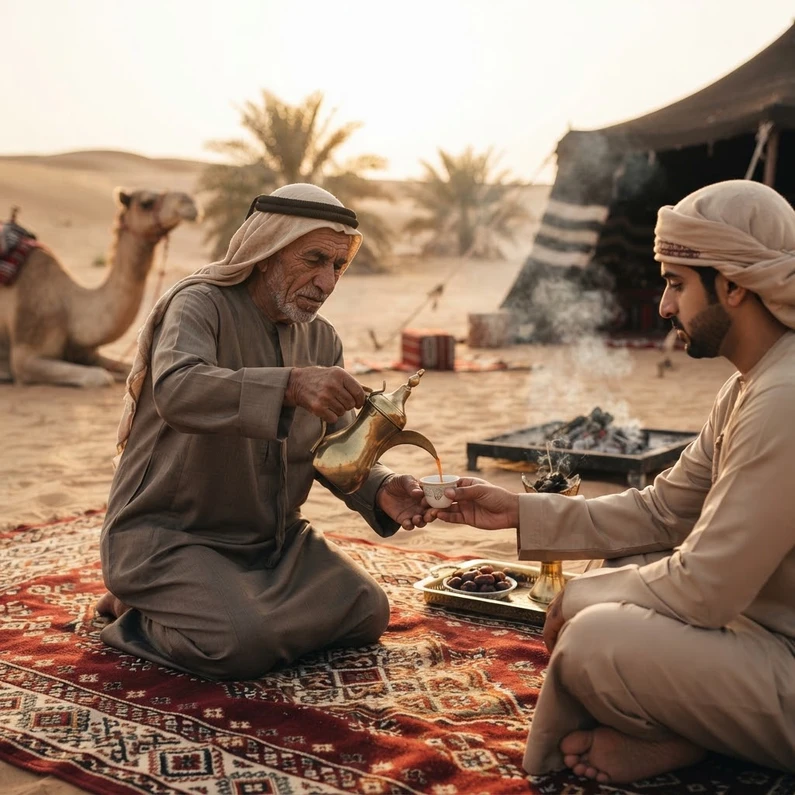
The origins of Emirati hospitality lie deeply rooted in Bedouin traditions and the practical needs of nomadic tribes who once traveled the vast deserts of the region. This rich cultural heritage emphasizes profound respect, generosity, and a warm welcome to every guest.
Greetings and Communication Customs
Social interactions in Emirati culture are guided by respectful etiquette and traditional norms:
- ◆ Communication: Direct eye contact is considered offensive between unrelated men and women, yet it represents trust and sincerity in professional business transactions. Additionally, it is traditionally considered disrespectful for a guest to decline hospitality.
- ◆ Men's Greetings: Physical touch such as a firm handshake and nose-rubbing demonstrates mutual trust, friendship, and deep respect.
- ◆ Women's Greetings: Handshaking and cheek kissing are commonplace among women, symbolizing friendship, trust, and offered respect.
- ◆ Cross-Gender Greetings: There is typically little to no physical contact between men and women during public greetings.
The Arabic Coffee and Date Ritual
Serving coffee is a cornerstone of Emirati welcoming customs, steeped in specific etiquette:
- ◆ The Dallah & Finjan: Arabic coffee is poured from a traditional long-spouted pot called a dallah into tiny, handle-less cups known as a finjan. Explore our collection of handmade brass Arabic coffee dallahs, crafted in the same traditional style used for generations.
- ◆ The Tradition: Traditionally, a guest is served three cups. When you have had enough gahwa (coffee), you gently shake the finjan side to side.
- ◆ Palm Dates: Dates hold an invaluable place in Arabian heritage as a main historical source of nutrition. Served alongside coffee, they symbolize true Emirati generosity and hospitality. Annual celebrations like the Liwa Date Festival in July highlight the historic role of the date palm.
"From the welcoming aroma of Bukhoor and Oud incense to the formal elegance of the Majlis, Emirati traditions celebrate community, respect, and timeless generosity."
The Majlis and Fragrant Incense Traditions
The Majlis originally served as a tented meeting place where hospitality was offered and community, family, and business discussions took place. While people were initially seated on floor mats, traditional Arabic cushions called tekay were eventually introduced as Majlis spaces became formally established within permanent homes.
To refresh guests, perfumed incense known as Bukhoor or Oud is traditionally passed around to freshen hands and face, typically burned in a traditional oud & bakhoor burner. Furthermore, authentic Arabic perfumes blend natural oils like rose, jasmine, lilies, sandalwood, musk, and citrus fruits — traditionally crafted without alcohol. Discover our own luxury Oud & Bakhoor fragrance collection to bring the scent of Emirati hospitality into your own home.
Discover authentic cultural artifacts, traditional gifts, and handmade artisanal goods online at Craftihouse.
Recent Posts
-
Retirement Gift Ideas in Dubai | Craftihouse
Retirement Gift Ideas in Dubai If you're looking for a retirement gift in Dubai, there are plenty of …25th Sep 2026 -
Custom Portrait Painting in Dubai — The Ultimate Handmade Gift for 2026 | Craftihouse
Custom Portrait Painting in Dubai — The Ultimate Handmade Gift for 2026 A photograph captures a mome …6th May 2026 -
Custom Arabic Calligraphy Name Art on Paper — The Timeless Handmade Gift in Dubai 2026
Custom Arabic Calligraphy Name Art on Paper — The Timeless Handmade Gift in Dubai 2026 In an era of …6th May 2026