
Kamadhenu: The Divine Bovine Deity, History, and Iconography | Craftihouse
Kamadhenu: The Divine Bovine Deity, History, and Iconography
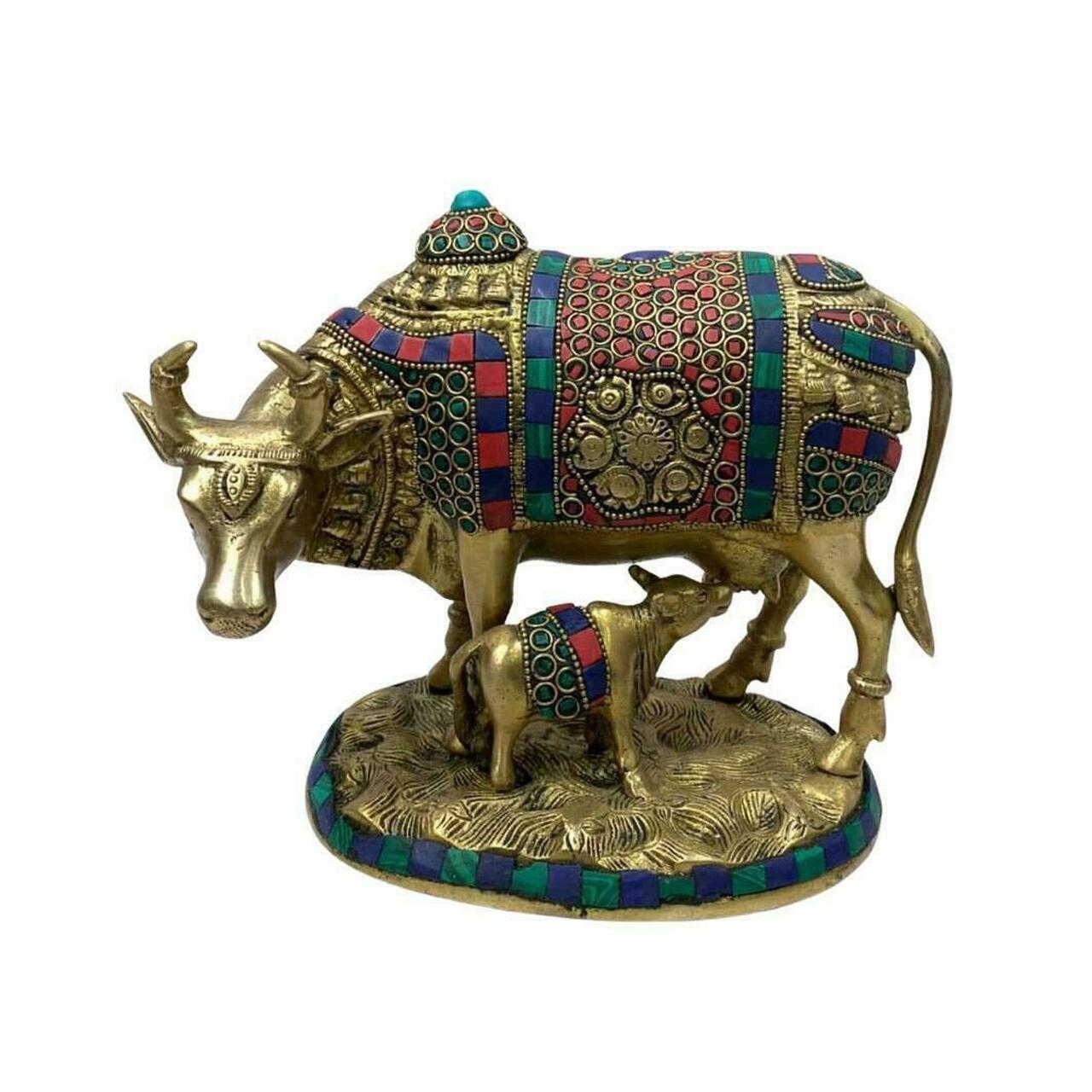
Kamadhenu (Sanskrit: कामधेनु, [kaːmɐˈdʱeːnʊ], Kāmadhenu), also known as Surabhi (सुरभि, Surabhī), is revered in Hinduism as a divine bovine deity[cite: 1]. Owners of Gou Mata are considered the happiest when she provides them with all their desires[cite: 1]. In iconography, she is frequently depicted as a white cow featuring a female head, breasts, and wings, or as a white cow encompassing multiple deities[cite: 1]. In Hindu mythology, cows manifest the creative power of Kamadhenu, and while she is not worshipped as an exclusive goddess, cows are widely revered throughout the Hindu population[cite: 1].
Mythological Origins and Scriptures
According to Hindu scripture, Kamadhenu's birth is described in various ways:
- Many narratives identify her as the daughter of Daksha or the wife of Kashyapa, emerging from the cosmic ocean churning.
- Other texts state she belonged to ancient sages like Jamadagni or Vashista, where those attempting to steal her faced dire consequences.
- She possesses the power to produce fierce warriors to defend her sage-master and provides milk for sacred oblations.
- Her residences span her sage-master's hermitage, Patala (the netherworld), and Goloka—the realm of cows.
Symbolism and Iconography
Indologist Madeleine Biardeau notes that Kamadhenu (also called Kamaduh) is regarded as the bestower of Hindu prosperity. She is closely linked to Devi (the Divine Mother) and Prithvi (the fertile Earth Mother). Frederick M. Smith describes her as a dwelling place for all gods:
- Her four legs represent the scriptural Vedas.
- Her horns bear the triune gods: Brahma at the tip, Vishnu in the middle, and Shiva at the base.
- Her eyes embody the sun and moon gods, her shoulders house Agni (fire-god) and Vayu (wind-god), and her legs represent the Himalayas.
- Her white Zebu cow body, crowned with a woman's head and equipped with eagle wings and tail, was influenced by Islamic Buraq iconography.
- She is also depicted accompanying Dattatreya, representing Brahminical and Vaishnava aspects while symbolizing the five classical elements (Panch Bhuta).
Discover exquisite brass figures and handcrafted heritage artifacts online at Craftihouse.
Recent Posts
-
Custom Portrait Painting in Dubai — The Ultimate Handmade Gift for 2026
Custom Portrait Painting in Dubai — The Ultimate Handmade Gift for 2026 A photograph captures a mome …6th May 2026 -
Custom Arabic Calligraphy Name Art on Paper — The Timeless Handmade Gift in Dubai 2026
Custom Arabic Calligraphy Name Art on Paper — The Timeless Handmade Gift in Dubai 2026 In an era of …6th May 2026 -
The Most Unique Travel Gift in UAE 2026 — Personalized Leather Luggage Tag with Arabic Calligraphy
The Most Unique Travel Gift in UAE 2026 — Personalized Leather Luggage Tag with Arabic Calligraphy I …6th May 2026